Tuesday, December 11, 2007

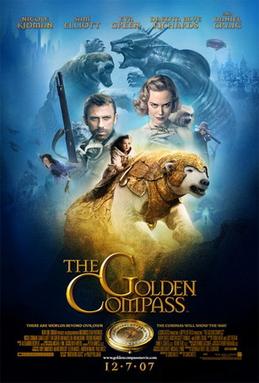
My Thoughts on the Golden Compass


I wrote two articles on The Golden Compass for two different online magazines. You can check out my first one here for Christ & Pop Culture, which also got picked up by The Pearcey Report. And you can read my official film review at Decapolis.com

Labels: , , , , , ,

Wednesday, November 14, 2007

The Complete Series

Well I have finally finished the far too long series on Christianity and the Imagination. I appreciate your tolerance through it all and am glad to be done with it myself. Here, now, is the complete series available if you're interested.

Labels:

Tuesday, November 13, 2007

Reflecting on the Imaginative: Five Questiosn to Ask

As I conclude this series now, finally, I want to offer these final five questions that you can ask of any imaginative piece that you come across. These questions will help you formulate the worldview of the artistic piece or its creator.

(1) What does this work say about humanity? --> Is humanity, in this song or painting etc., presented in the image of God? As having dignity and worth? Or as an animal, or a beast? Is humanity seen as perfectly good or as inherently sinful? What does the work say about humanity?

(2) What does this work say about God? --> Is God present or not present in this work of art? Is there any hint of his existence or role in the world? Is God dead or just ignored? Is he to blame for the evil in the painting, or is he the source of goodness in the poem?

(3) What is our experience of the work? --> How does this song make you feel? What does that story make you think of? How did you connect with the characters in the film? If the artist is good he will have tried to manipulate your responses to get what he most desires, this will tell you something about the point of the art and its worldview.

(4) What does the work value? --> What is emphasized, praised, highlighted, and condemned in the work? Each piece will express some sort of value, uncovering it will be a key to unlocking the overall worldview.

(5) Does the piece achieve its goal? --> This is not merely an assessment of its effectiveness. It is important to know the author's intent, but if the goal is not achieved we must deal with the accidental influences that it creates. Be aware of these and it will help you to assess the piece theologically.

Labels: ,

Monday, November 12, 2007

Fallacy # 5: Works of Art Make No Truth Claims


This final fallacy is an obvious one for our postmodern culture to have turned to. This theory says that art is purely an aesthetic expression. "Art for Art's sake" goes the expression. Movie producers and directors make these claims as do painters and poets. The failure of this claim, however, is that it fails to consider that artists do not create without purpose, and purpose equals intended meaning.

Leland Ryken gives the example of words on the side of a cliff. If you were driving down the highway and saw words in the side of a cliff what would you think? You'd probably wonder what they were doing there. What if you found out they were caused by erosion? Well then you wouldn't probably wonder what they meant anymore, because, after all, erosion does not create with purpose. Artists, however do. And every time we view art, or listen to art, or read art, we believe that the artist has created with meaning. Even Jackson Pollock and Gertrude Stein created with purpose.

Since the subject of art is the expression of the human experience there is inherent within ever piece judgments, values, and perceptions of the world. Each artist has a worldview. Jay Z's worldview is different than Maya Angelou's but each has one that comes forth and makes truth claims in their various pieces of art.

To suggest that art has no truth claims is to suggest that, in fact, the art is meaningless (and even this may be an expression of meaning, see Gauguin).

Labels: , , ,

Saturday, November 03, 2007

Fallacy # 4: The Usefulness of Art Depends on Its Philosophic Viewpoint


I have been discussing, for sometime now...(I know, perhaps too long), that the imagination, and art, convey truths. And that this has great benefit for us. But what are we to do when we run into a piece of imaginative art where the truth is not told? What do we do with the musical compositions of John Cage, whose nihilistic philosophy shaped his approach to composing? The answer for those who hold to this particular fallacy is that we throw it out! There is no value, they say, in works that do not tell the truth. The value is wholly dependent upon the artwork's worldview.

At one level we can appreciate this group's adherence to objective truth, and applaud them for not simply lumping all art together as present viable options for truth. On the other hand, their view is extremely narrow and misses a key feature of all artwork. As Leland Ryken writes, "Works of art clarify the human situation to which the Christian faith speaks, even if their interpretation of reality is wrong."

Art, whether it is visual art, music, or literature, tells us something about the people who create and enjoy it. A painting paints for us a picture of the thoughts and feelings, and values of the culture. If Christians wish to have relevant ministry to their neighbors they can learn something from their art. Picasso's painting Les Demoiselles d'Avignon reveals a man who had shifted his thought from humans born in a state of innocence to the loss of humanity (observe the picture moving from left to right). Of course Christians deny this to be true...the fall did misshape humans, but we still bear the evidences of being made in the image of God. But this does tell us something about the deeply depressed soul of a man.

Art's value far exceeds its philosophic viewpoint (not that it should be ignored or downplayed. Art tells us about the world, art furthers thoughts about specific worldview points, and art, even with its sometimes fallacious views, can be of good to Christians for evangelism, apologetics, and general life in this sinful world.

Labels: , , ,

Friday, November 02, 2007

Fallacy # 3: The Usefulness of a Work of Art Consists of its Abstract Ideas


With the increased criticism of that art is merely entertaining and therefore, for some reason, less important to society, art apologists have sought to make a lasting place for art in the world. Their approach, however, robs art of its power and uniqueness. The art apologist attempts to put art on the same level as philosophy and psychology and theology, making it purely ideational. Again this approach robs art of its power.

Art is not useful simply because of its abstract ideas. The very power of art is in its overall presentation, not simply the ides behind it. Leland Ryken is right when he states, "If the ideas are the important thing in a work of art, we obviously do not need the work itself once we have deduced the ideas." The idea of inherent sin isn't nearly as compelling as is reading Lord of the Flies. As Ryken says, "Who would be willing to substitute the thrill of actually experiencing one's favorite novel or movie for a one-page-summary of the ideas embodied in it?" Art's power comes from its overall presentation, and anything less is reductionistic at best, and may almost make art more useless then useful.

Labels: , ,

Tuesday, October 23, 2007

Fallacy # 2: All Art Tells the Truth


This fallacy sound similar to the former but it is really much more subtle. This argument does not equate art with truth, but rather since all art is stating something and speaking to a real audience, then we may assume that there is truth to be heard in each artwork. This theory, however, like the former is a bit naive. It takes only a quick perusal of any artistic form to find error, or at least contradiction between worldviews. Take for example literature.

C.S. Lewis has keenly noted that the "value structure of most literature (and of the other arts) is...'sub-Christian.'" Lewis clarifies by outlining what the value system of European literature looks like: (1) honor; (2) sexual love; (3) material prosperity; (4) Pantheistic contemplation of nature; (5) Sehnsuct [longing] awakened by the past, the remote, or the (imagined) supernatural; (6) liberation of impulses. And it is not European literature alone that bears these hallmarks. Everything from Kate Chopin to Charles Brockden Brown to Henry David Thoreau (not to speak of the more modern authors).

Beyond literature we find divergent worldviews in music, movies, and paintings. John Cage's philosophy behind his composition is particularly dangerous, as is Jackson Pollock's approach to painting. One need only look at what various artistic and imaginative expressions are actually saying to find the fallacious nature of this statement: all art tells the truth.

We must be discerning with our art appreciation. Know that inherent in every piece is a worldview that may or may not fit with the Biblical worldview, it is your job to asses the imaginative, reflect upon it, compare it with Scripture, and decide.

Labels: , ,

Wednesday, October 10, 2007

Reflecting on the Imaginative: Fallacy # 1


As I draw this series of posts to a conclusion I wanted to take time to speak to the issue of Christian reflection on the imagination. Christians have not always done this well, particularly in the 20th and 21st century Christians have become ignorant of what makes good art, and especially of the imagination. So I have a list of five fallacies which I will briefly detail, so that we may avoid this pitfalls in critiquing and enjoying creativity.

The first fallacy says the following: Art is by its very nature TRUE!

This argument usually stems from those who are trying to defend the arts from its utilitarian critics. Their argument usually states that because art conveys ideas and have an intellectual content to them. The argument attempts to completely wipe out the demand for art to be "useful," for its defenders have stated that all art is useful because it reflects truth.

Leland Ryken warns us here, however, that such a "defense" confuses ideational content with intellectual truth. Ryken writes:

The fact that art has ideational content does not mean that it expresses truth. The ideas in a work of literature or art might be untruthful. In fact, they frequently are. People who make the equation of ideational content with truth have been much too facile and undiscriminating in their claims that hte arts teach truth.


The "TRUTH" about the arts is that their creators possess a variety of conflicting worldviews. One piece of art may state that the world is "meaningless" (such as Marcel Duchamp's Nude Descending a Staircase), while others would seek to convey the grand reality of the Creator God (like Michaelangelo's Sistine Chapel painting of the Creation). Obviously both worldviews, and the art that expresses them, cannot be true. One or the other must be wrong. We must be careful not to blindly lump all art together, we must be discerning. When we speak of the imagination and the imaginative we must be sure that some imaginative creations are lies, and, therefore, do not deserve our personal applause.

Love the imagination, but be discerning about the imaginative expressions in our world.

Labels: , , ,

Tuesday, October 02, 2007

Recommending the Imaginative: Ratatouille


My outline states that I am suppose to be recommending to you Classic English Literature. Seeing as how I have already done that, however, I have chosen to skip that recommendation and move on to the next, which seems perhaps odd in the company of such a well respected element. My next recommendation for growing your imagination is the 2007 Disney/Pixar animated film Ratatouille. This delightful film about a rat with a keen nose for good food romanticizes creativity and inspires its audience.

Remy the rat, and main star of this film, loves to cook and create wonderful recipes. He takes interest in their smells, their colors, their presentation, and especially in their tastes. And, what's more interesting, as we watch Remy in the kitchen, we can't help but feel that food is as wonderful as he claims it is. We see the colors he sees when he bites into a piece of cheese, and we smell the aromas of the kitchen that he smells. This film has a way of not only telling a story, but drawing us into it and inspiring us to be like Remy.

When I left this film I was reminded of the mandate which God has given me to men to rulers over the earth, part of which involves pop-culture, and requires creative expression. I am delighted to recommend Ratatouille to you.

Labels: , ,

Saturday, September 29, 2007

Recommending the Imaginative: Stan Lee


I can hear the scoff in your throats all the way across the Internet. "Are you kidding me? A comic book writer?" I understand your cynicism, but hear me out. Stan Lee has done something in the creative world that should not go unnoticed. His revolutionary work with Marvel Comics opened up not only a whole new world for comics, but for the development of super heroes in modern pop-culture.

When Lee first began work on comics the market was controlled by the idea that superheroes should be flawless and indestructible. What Stan Lee did wad to re-design the modern superhero as a flawed man struggling not only with everyday problems but also battling internally between the two worlds of superhero and alter-ego. His first character, Spiderman, is the epitome of this new design.

His comics would also include relevant social commentaries and critiques and examine a deeper, more meaningful side to the world of Comic books. These are just some of the facts that no real culturally aware person can overlook.

This may seem like an odd person to include in with the likes of J.R.R. Tolkien and C.S. Lewis, after all not only were both amazing literary scholars and authors, but they were both Christians. What should you think of my recommending someone who is not a self-proclaimed believer in the Lord Jesus Christ? How can he help us understand creativity and the imagination better from a Christian perspective?

The fact is that God did not give culture only to Christians, nor did He give wisdom and creativity to Christians (just like He did not give the gifts of science and math and medicine to Christians alone). Certainly worship of God is the ultimate goal of the imagination and creativity and thankfulness to Him is due for it, and no creative work will ultimately be completed until such is done. But Stan Lee has offered to us not only a new form of art and a captivating method of storytelling through images and simple dialogue, but he has offered to us an imaginative re-interpretation of the superhero. In this re-interpretation we see the natural human struggle between our tendency to self-absorption and justice. We see an innovative way to express the pressure and importance of helping others. These are values, of course, which no Christian can ignore, and while we would go further than Lee, we can, nonetheless, thank him for reminding us that heroes can be relatable and "cool."

Labels: , ,

Friday, September 21, 2007

Recommending the Imaginative: C.S Lewis


Like Tolkien Lewis stands out among those Christians with an imagination. Lewis was a Scholar, a colleague and friend, in fact, of J.R.R. Tolkien (It was through Tolkien that Lewis eventually came to abandon atheism and believe the gospel). What marks C.S. Lewis is his ability to create a world of beauty and tell the gospel story through creative means.

Lewis' Narnia myth isn't as elaborate, detailed, or cohesive as Tolkien's myth, but it is nonetheless and amazing thing to read The Chronicles of Narnia and see the gospel story unfold before your eyes in that imaginative setting. In writing his seven volume fantasy story Lewis created a world that was not just for kids but one that was for adults too. He is known to have said that a good story is one that is not just good for kids, but which adults can enjoy too.

Lewis works bear several interesting marks as a whole:
* The Christian Faith
* An appreciation of Love and/or Friendship
* A vast knowledge of classical literature
* Greek & Roman Mythology
* Fantasy

All these elements together make for a, sadly, markedly different Christian author. When you read Lewis you will not only find yourself captivated by his storytelling, but you will understand, and love the gospel better because of it. The Lion, the Witch, and the Wardrobe, has one scene with Aslan and the two girls that gives me chills of excitement every time I read it. Use Lewis, friends, to spur on a godly imagination.

Labels: , ,

Tuesday, September 18, 2007

Recommending the Imaginative: J.R.R. Tolkien


John Ronald Tolkien was undoubtedly one of the greatest literary geniuses of the 20th Century. His most famous works include The Hobbit and The Lord of the Rings Trilogy: The Fellowship of the Ring, The Two Towers, and The Return of the King. These works have forever left their mark on the world of fantasy literature, Christian literature, and English literature (a three-fold impact not often attained by men).

What makes these works so amazing is not only their outstanding stories and characters, which Tolkien, as an Oxford English professor crafted beautifully, but it is their epic stature and mythical legacy. The world of Middle Earth is one of the only 20th Century myths to actually withstand the tests of time. The depths to which the author went in giving us back story, and context. The Philology work in Elvish language that Tolkien demonstrates, and the geographich mapping and descriptions are marks of a myth that is unparalleled in almost all English literature, and at least since its publication.

What makes Tolkien's work so significant for this discussion is that Tolkien was a devout Roman Catholic, and played a crucial role in the conversion of his colleague C.S. Lewis from Athiesm to Christianity. His journals are full of religious sentiments, and praises to God, and yet for all his religious devotion Tolkien was a man of art as well. The fact that a man can be both an artist, an imaginator (if you will allow), and a man of God should not go unnoticed. His essays on English Literaure, on Poetry, and on Fiction are some of the most amazing pieces that he wrote outside of the context of the Lord of the Rings. So to you, friends, I recommend J.R.R. Tolkien's works.

Works:
The Hobbit
The Fellowship of the Ring
The Two Towers
The Return of the King
The Silmarillion
The Father Christmas Letters
Farmer Giles of Ham
The Children of Hurin
The Adventures of Tom Bombadil
On Fairy Stories
The Letters of J.R.R Tolkien
Poems and Songs of Middle Earth

Labels: , ,

Thursday, September 13, 2007

Recovering the Imaginative: Play

It is not enough to simply be academic in your pursuit for the recovery of imagination, you must do more than read and study on the rise and demise of imagination in American culture. To really see a return to Christian embrace of the imagination Christians need to play more.

What I mean here is to say that Christians need to be creative. If it is true that God is creative, and we are made in His image, then at least we know that we have the God-given capacity to be creative (though I tend to think it is more of a responsibility than a mere possibility). By using the word "play" I know some will accuse me of being trivial and belittling the Christian life. Such is not my intent, but I do believe that Christians should play. I say play because it carries with it both the connotations of creativity and pleasure, something Christians need to do in a world that is surrounded by sin and perversion and needs to see a fresh perspective on what Biblical fun looks like.

By being creative I do not presume to imply that we should all be sculptors and painters, though perhaps you are one, in which case you should use your art for God's glory. But there are myriads of ways for all of us to be creative in what we know how to do. Can you play music, bake, scrapbook, decorate a home, create complex math equations, write, or even play sports. There are ways to play in what you do that express creativity and open up opportunities for the imagination to take root and come out to the surface. Don't just read about Narnia and fall in love with the imaginative scenes described in those works, but then imagine a beautiful desert and begin creating it. Or think of a complex math equation that will be a challenging and extremely fun problem to solve.

Creativity is an expression of our God-given nature and it opens up doors for the imagination to take root as our expressions of creativity expand and become even more elaborate than they first were. So play and recover the imagination for Christians and for the American culture at large.

Labels: ,

Sunday, September 09, 2007

Recovering the Imaginative: Preserve Childhood


I write frequently to refute the assumption that children are innocent. Christians know from God's Holy Word that children are born sinners, and rebels against God. There is no such think called "child-like innocence." But, nonetheless, children, like all human beings, are made in the image of God and as such have His imprint stamped upon them. And this is clearly seen in the imagination of a child.

As the imagination has slipped away from culture I believe it is in part due to the rapid acceleration of children into adolescence. Neil Postman has written an entire work detailing "The Disappearance of Childhood." One part of the book speaks about the need for kids to have spontaneous, self-organized and self-controlled games. Postman writes:

There is no more obvious symptom of the merging of children's and adults' values and styles than what is happening with children's games, that is to say, they are disappearing. While I have found not studies that document the decline of unsupervised street games, their absences is noticeable enough and, in any case, can be inferred from the astonishing rise of such institutions as Little League baseball and Pee Wee football...the games of American youth have become increasingly official, mock-professional, and extremely serious...The idea that children's games are not the business of adults has clearly been rejected by Americans, who are insisting that even at age six, children play their games without spontaneity, under careful supervision, and at an intense competitive level.


The point that Postman is making here is that kids should not play this way, they have their own way of playing which is distinctly related to their age and nature as children. In relation to this series on the imagination that I have been doing there is a great parallel. The child-like play which Postman only barely scratches is closely connected to the innate imagination that children have. Children should play spontaneously because it reveals and explores their creativity and their imaginations.

To recover the imagination in our culture we have to allow Children to play, and we, as adults, have to watch them play and learn from them. For many adults, their own imagination is long gone. It has been rubbed out by realism and naturalism, by viewer's choice news, and pop-culture entertainment. To recover it we need to take notes on our kids. Listen to them tell stories, and watch them play. Watch little boys re-enact scenes from The Swiss Family Robinson , and follow little girls into the dinning hall of the Queen of Fairy land, where she sips tea with her teddy bears (the conversations will, I am sure, delight you).

The recovery of imagination is important for our culture. I have argued that it can point us back to the truth in powerful and affecting ways, and it can bring us closer to the divine. But it has been largely lost and one of the ways that we can begin to recover it is through our children. Let your kids be kids, and then you too enter into their world for a fresh view on life, and learn from their imaginations!

Labels: ,

Saturday, September 08, 2007

Recovering the Imaginative: Read


If the imagination has been on the decline among Evangelical Christianity, and in our culture at large, how can we help the process of recovery that has been slowly returning? The answer is, I believe, three-fold, and the first step is to read good fiction.

It won't take much convincing for you to agree that good fiction is replete with the imaginative. Scenes, characters, events, and other elements of fiction reveal the glorious world of the imagination before us. Poetry is marked by the comparison of lovers to flowers and sunsets (odd comparisons in reality, but just perfect in the imagination). Stories often end with unrealistic events and adventures, and with good guys saving the day and bad guys dying. Drama compresses great lengths of time. And even realist fiction revels in the moral lesson learned from suffering and tragedy. Great examples of imagination in fiction include: Geoffrey Chaucer's The Canterbury Tales (which uses almost every literary convention you could conceive of), C.S. Lewis' The Chronicles of Narnia, J.R.R. Tolkien's The Lord of the Rings Trilogy, Homer's Odyssey , John Milton's Paradise Lost, William Shakespeare's A Mid Summer's Night Dream, and Edmund Spenser's The Faerie Queene.

English Literature, of which I am most familiar with, has a long history of world play. That is there is a legacy of the imagination to be found in English literature, most of which in some form or fashion shaped nearly every writer in the Western world. C.S. Lewis himself was strongly influenced by both Edmund Spenser and Thomas Malroy. Inspiration to be imaginative comes largely from seeing it done well. And reading is particularly helpful in instilling imagination in us because we must picture the scenes in the book ourselves. If the author creates a magical world with his words and describes the scene vividly for us, as most of the authors listed above do, then our imaginations cannot help but take flight and create their words in images. Reading, then, doesn't just demonstrate good imagination and creativity, it invites us into it and we partake and experience that imagination!

So to recover the imaginative, read good fiction!

Labels: , ,

Tuesday, September 04, 2007

Imagination's Demise: Fundamentalism

There is a current trend in post-evangelical Christianity to blame fundamentalism for everything. This is at least an overstatement, and tends to ignore the many important contributions of our Fundamentalist forebears to the faith. That being said, however, in their rejections of the liberalism of the mainstream American churches the Fundamentalists did indeed go too far in the opposite direction. They not only abandoned the liberal hermeneutic and their social gospel but along with that an almost complete abandonment of the larger culture in which these new philosophies took place (or so they thought). This abandonment included, by in-large, the imagination.

With the rise of modernism the Church found itself in a place they had not been in centuries: outside of the mainstream. Their reaction was to recoil from the world and shelter themselves from its encroaching atheism. Of course this is not true of all evangelicals during the 19th century, but it is true of a large number of Fundamentalists, so much so that the label “Fundamentalist” has come to refer to something quite different then it was originally intended to. With the “invasion” of modern atheism and naturalism on society Christian values were being displaced and, at least, questioned. So, for example, in the 19th century it is estimated that almost 70 percent of Americans thought that the theatre was sinful, because of it was “worldly entertainment.” There was an aversion among Protestants to relaxation, play, idleness, and simple amusements, and along with card playing, horse-racing, dancing, and novel reading, imagination was given over to the world, so to speak.

Their reaction isn’t entirely flawed. For when God was taken out of the picture something needed to be supplemented in the larger culture to fill the hole. Idle pleasure seemed a good fit and American society thrust itself into the entertainment driven culture that we often hear it accused of being today. But the Fundamentalists ended up throwing the baby out with the bath water, and everything good about pop-culture was handed over to the world, not least of all imagination.

The Fundamentalists were pulling from the tradition of their Puritan forebears by upholding a strong work ethic, otherwise known as the Puritan Work Ethic, which honored hard work and shunned frivolity and idleness. They also pulled from the Puritan tradition of associating, wrongly I believe, the moral looseness of their opponents with the entertainment in which they took part.

As pleasures and entertainment itself was winnowed from the Protestant worldview, so imagination was looked down upon as “worldly” too. This was a major loss to Christians, and one that still affects us today (see Donald Williams article in Touchstone Magazine). But thankfully this problem would not go un-noticed.

Labels: ,

Wednesday, August 29, 2007

Imagination's Demise: Realism

Realism began as a French art movement in the late 1800s, but its basic principles became the guidelines for the movement across disciplines. Realism is marked by the following:

1. Truth is found in material objects
2. Truth is verifiable by Science and the Scientific method
3. Everything is explainable

What realism did to imagination was make it an inferior artistic expression. Mystery and fantasy were inappropriate forms, and naturalism and science were the key means by which the human condition was explored.

Realist writers didn't abandon wholly the elements of good fiction, but all scenes, adventures, and actions were dealt with in terms of real world and science. Imagination would dwindle in pop-culture.

Labels: ,

Thursday, August 23, 2007

Imagination's Demise: Pop-Culture

The development of pop-culture in America has had a myriad of effects on our culture at large. There are a number of cultural historians who continue debate the benifits of pop-culture. I want to tred carefully here, and for a number of reasons: (1) I am not a cultural historian, (2) I do believer that latter developments in pop-culture will foster a very good imagination. That being said, however, early on the development of pop-culture did, I believe, help to diminish our imaginations. Here's how.

First, through specialization in instant gratification. The very nature of pop-culture is bound up in instant gratification. Transitioning from high-culture, where art and music required thoughtful investment by artist and audience alike, pop-culture brought the level of involvement down. The culture could now be "entertained." The imagination, however, takes real time and creative investment. There was now a tendency to extreme expressionism (see absurdity of modern television's reality tv and game shows), and the accessibility of content. With these developments imagination simply took too much time, and thought.

Second, through the stress on entertainment over art. Ken Myers writes:

Entertainment reaches out to us where we are, puts on its show, and then leaves us esentially unchanged, if a bit pooerer in time and money. It does not (and usually does not claim to) offer us any new perspective on our lives or on other matters in creation...Kaplan remarks that 'a taste for popular art is a device fo rremaining in the same old world and assuring ourselves that we like it.'


This distinction, following on the heels of the shift towards more instant gratification, only further increased the devaluing of imagination, which took to much time and thought.

In a future post I am going to argue in favor of certain elements of pop-culture for the imagination. But suffice it to say that it was the early developments of pop-culture that led to a decline in imagination in our culture.

Labels: ,

Sunday, August 19, 2007

Imagination Matters: Truth


The statement "All truth is God's truth," may be, forgive me, true, but so is the statement "All lies are Satan's lies." So therefore we must understand what kind of truth it is that the imagination can convey to us.

For starters let it be stated that art (whether that's paintings, sculptures, poetry, music, or film) does not state truth in propositional form or as abstract/conceptual ideas. Rather it solidifies truth in a concrete experience. While it is true that we must have the abstract words "love," "beauty," and even "faith," the labels don't themselves do justice to the actual things. Do you feel more joy out of thinking on the word love, or out of looking into the face of your bride? Do you feel more pleasure out of the word beauty, than out of the view of the sunrise over a dew covered meadow? There is something about the imagination, like art, which gives us an experience of these abstract concepts.

The imagination conveys truth about our world through experiences. Listen to the words of Louise Rosenblatt:

Students value literature as a means of enlarging their knowledge of the world, because through literature they acquire not so much additional information as additional experience...Literature provides a living-through, not simply a knowledge about...


What the imagination does, when it is expressed, is grant its audience, or creator, a real experience of truth. Though it should be said that some truth should not be experienced, in the sense that audiences and imaginative minds can experience the truths of sin, for now I will simply state that the imagination, as it works itself out, grants us real experiences of divine truths. Romeo & Juliet invites us into love; Michelangelo's Horned-Moses invites us into the dramatic and contemplative; and Alfred Hitchcock's Rear Window invites us into the depths of human emotion and the terrors of the city.

All truth is God's truth, and the imagination allows us to experience that truth in unique and tangible ways. Not that it replaces human interaction, but that it heightens it, supplements it, and instills longings in us for it.

Labels: ,

Friday, August 17, 2007

Imagination Matters: Reflection


Imagination has not gotten a good wrap in recent years among Christians. This is owing, of course, to a number of major factors, of which I will explore in more detail later. In my last post in this series I focused in on the accusation that the imaginative is "escapist." The reality, however, is that imagination brings reality into perspective.

There are a number of examples of this from history, but I'll let literary critic and Presbyterian Evangelical Leland Ryken speak to us on the issue first. Ryken writes:

The Bible is filled with poetry and metaphor and with imaginary pictures of reality. If we doubt that the imagination can be a vehicle for the truth, we need only read the Old Testament prophets and the New Testament book of Revelation. When we turn from the Bible to the Christian world today, we cannot help but be struck by the contrast. We rarely trust the power of metaphor or fiction or paint on canvas or musical sound to express the truth. And when Christians do respect the voice of the imagination, they have a tendency to reduce art to realism. The more realistic a painting or story is, the better it is, runs this line of argument. In the process, we settle for some decidedly mediocre and inferior art. After all, works that never violate external reality frequently say little that is significant about the issues of life, while art that is highly imaginary can touch upon life powerfully at many points. Nor should we forget that the Christian world view extends reality far beyond the external world.


It is the imaginative that can offer the most significant commentary on life. When we watch a movie, read a fantasy book, or see a moving piece of art we can be informed about our world in a unique, even shocking, way. Realism offers us the same things that we encounter everyday and can often feel like the same things we are used to, therefore they are easy to ignore. But when a rat teaches us about creativity (as in Ratatouille)we can sense our responsibility to be creative. See Alexander Pope, Ben Johnson, and The Simpsons for other evidence. The simple fact is that fantasy offers us a chance for genuine reflection on culture precisely because it is outside of our familiar context.

Labels: ,